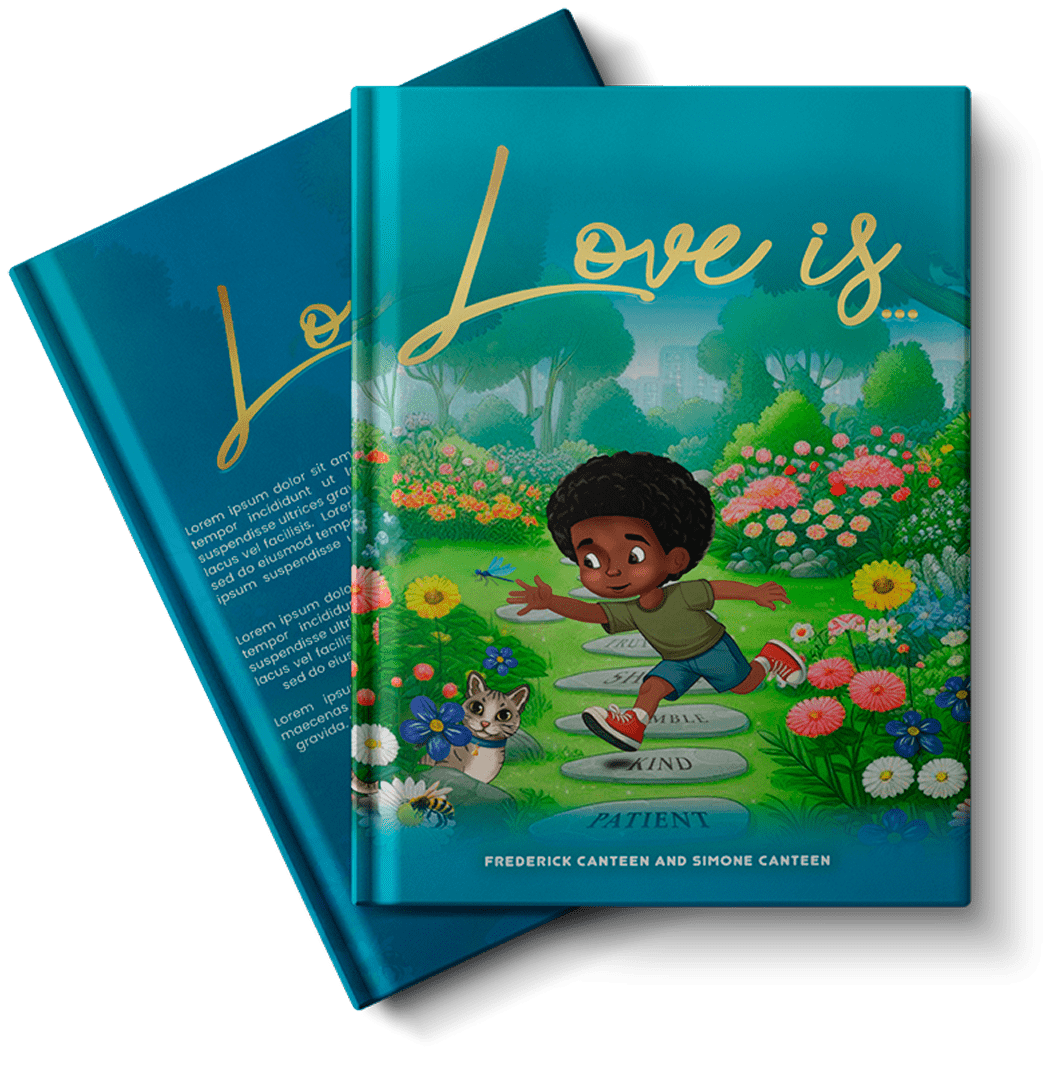
Love is

Why "Love Is…" Came First
When we began Two Vessels Books, we did not start with the biggest lesson or the most complex story.
We started with love.
Because before children learn about wisdom, resilience, courage, or growth, they first learn what it feels like to be loved.
Long before a child can fully define love with words, they experience it in everyday moments:
a parent sitting beside them,
gentle conversations outdoors,
small acts of kindness,
shared laughter,
comfort after a hard day,
or simply feeling safe in someone’s presence.
And in many ways, that felt like the most important place to begin.
Sometimes love looks grand and unforgettable.
But often, it is found in the quietest moments.
A mother sitting beside her child outdoors on a blanket beneath a soft blue sky.
Tiny hands reaching toward flowers.
The warmth of the sun on bare feet resting in the grass.
A dragonfly landing gently nearby.
A child laughing while picking strawberries in the garden.
These simple moments may seem ordinary at first glance, but they often become the very memories that shape childhood most deeply.
And slowly, those moments became the beginning of Love Is…
Learning from a Slower Childhood
As a homeschooling family living in the country, many of our days are shaped by nature and the slower rhythms it brings. Childhood here does not always feel rushed. There is time to notice things.
Time to watch dragonflies drift through the air.
Time to spot ladybugs resting on tiny toes.
Time to garden together, observe the seasons changing, and learn lessons quietly from the natural world around us.
Some of the most meaningful conversations with children do not happen during carefully planned lessons. They happen unexpectedly while walking outdoors, tending plants, or sitting together beneath an open sky.
Children naturally ask deep questions when they feel safe enough to wonder aloud.
And one day, a simple question emerged:
“What is love?”
Not in a rushed or dramatic moment.
Just gently. Naturally. Curiously.
But sometimes the simplest questions carry the deepest meaning.
That question lingered long after the conversation ended. It became clear that love is not always something children learn primarily through definitions. More often, they learn it through experiences, observations, consistency, tenderness, and presence.
Children notice far more than we realize.
They notice patience.
They notice gentleness.
They notice safety.
They notice kindness.
And often, they begin learning about love through the smallest everyday moments.
That realization slowly became the heart behind Love Is…
Wanting Childhood to Feel Gentle Again
Modern childhood often feels loud, hurried, and overstimulated. Screens compete constantly for attention. Families are stretched thin. Even children are often pushed quickly from one activity to another, leaving little space for stillness, imagination, or wonder.
But childhood was never meant to feel rushed all the time.
Children deserve opportunities to simply sit in the grass, stare at clouds, notice butterflies, and ask thoughtful questions about the world around them. They deserve stories that preserve innocence, tenderness, and emotional warmth.
When creating Love Is…, we wanted the story to feel gentle.
Not flashy.
Not overwhelming.
Not filled with constant noise.
We wanted it to feel calm enough that a child could settle into it comfortably, almost like stepping into a peaceful memory.
That feeling became especially important when working on the illustrations.
Creating a World Children Would Want to Stay In
The illustrations in Love Is… became a beautiful part of the storytelling itself. We wanted each page to feel warm, peaceful, and alive—almost as though a child could step directly into the scene.
From the very beginning of the book, there is softness woven throughout the imagery:
a picnic blanket spread across the grass,
white clouds drifting through a light blue sky,
flowers blooming nearby,
birds flying overhead,
a mother and child sitting together in peace, outdoors.
Other pages invite readers into gentle moments of everyday life, like tending strawberries together in the garden or simply spending quiet time outdoors.
These illustrations were never meant to simply decorate the story.
They help create its atmosphere.
Children often connect emotionally through imagery long before they fully understand every word being read to them. They linger on colors, tiny details, expressions, animals, flowers, skies, and familiar moments that feel comforting.
We hoped the illustrations would feel immersive enough that children might wish they could stay there a little longer.
In many ways, that feeling reflects the kind of childhood we hope children experience more often:
one filled with warmth, wonder, beauty, and presence.
The Hidden Cat Named Spotty
There is also another small detail hidden throughout the book that children especially enjoy discovering.
A cat named Spotty quietly appears somewhere within the pages.
Spotty is never directly mentioned in the story itself, which makes children even more excited when they begin spotting her tucked into different scenes. Some children notice her immediately. Others become determined to search for her on every page.
What began as a small playful detail became something unexpectedly meaningful.
Children naturally notice little things when they are fully present. They observe details that adults often overlook. The hidden cat gently invites children to slow down, pay attention, and engage more deeply with the story world around them.
And honestly, that quiet attentiveness feels connected to the heart of the book itself.
Love often lives in the small things people might otherwise miss.
Inviting Children Into the Story
One of the most meaningful parts of Love Is… comes at the very end.
After the story concludes, there is an open space inviting children to draw or share what love means to them personally.
This page felt deeply important to include.
We did not want the story to end merely with our own words. We wanted children to pause and reflect for themselves.
What does love look like in their home?
Who makes them feel safe?
What moments make them feel cared for, comforted, or seen?
Children often understand more emotionally than adults realize.
Sometimes they express those understandings through pictures long before they can fully explain them aloud.
This final page allows the story to become personal.
It invites the child into the experience rather than simply leaving them as a listener.
The Scripture at the End
At the close of the book, we also included 1 Corinthians 13:4–7, a passage that has long shaped how many people understand the true nature of love.
“Love is patient, love is kind…”
These words have endured across generations because they describe love not merely as a feeling, but as something deeper:
patient,
gentle,
selfless,
enduring,
and compassionate.
Including this Scripture felt like a quiet foundation beneath the story.
Not heavy-handed.
Not forced.
Simply present.
Because the truth is, many of the lessons children learn about love are not taught through grand speeches. They are absorbed slowly through daily life, consistency, kindness, forgiveness, and care.
Love is often built quietly.
And perhaps that is why it matters so much.
Why "Love Is..." Came First
Looking back now, it feels natural that Love Is… became the first story we shared through Two Vessels Books.
Before stories about optimism, growth, wisdom, and life lessons, it felt important to begin with something foundational:
love.
Because love shapes how children experience everything else.
It shapes how safe they feel.
How secure they become.
How they learn to treat others.
How they understand kindness, patience, and belonging.
In many ways, love becomes the soil where childhood grows.
And perhaps that is also why nature became such an important part of this story. Gardens, skies, flowers, insects, trees, birds, and quiet outdoor moments all remind us to slow down enough to notice what truly matters.
Nature teaches gently.
Childhood should often feel gentle too.
As we continue creating stories like Sam’s Silly Day and Mama Tree, we hope to keep exploring childhood through warmth, imagination, nature, emotional growth, optimism, and the meaningful lessons quietly woven into everyday life.
At Two Vessels Books, our hope is to create stories that preserve some of the gentleness of childhood—stories rooted in meaning, wonder, warmth, and the quiet moments children may carry with them long after childhood itself has passed.